In-depth analysis
Amphorae, Capasoni and stainless steel: how the vessel shapes the wine
11/10/2026
How do Apulian wines age, and what allows certain bottles to evolve over time? The answer depends on the grape variety, the vintage and the decisions made in the cellar. Storage conditions after bottling also play an essential role.
Puglia is best known for its rich, full-flavoured red wines, produced from grape varieties such as Primitivo and Negroamaro. Yet behind this distinctive character lies a wide range of styles. Some wines are made to be enjoyed in their youth, while others possess the structure and balance required to develop greater aromatic complexity and harmony over time.
Ageing is the gradual evolution that takes place in a wine over time. It begins during maturation in the cellar and can continue in the bottle, where the wine slowly develops and changes.
However, not every bottle improves with age. A wine intended for ageing must offer a good balance of acidity, tannins, alcohol and concentration. In sweet wines, sugar also contributes to their ability to mature and develop.
The final result depends on the quality of the grapes, the decisions made during winemaking and the conditions in which the bottle is stored.
In more structured Apulian red wines, time gradually transforms the colour, aromatic profile and sensations on the palate.
The purple and ruby hues of youth may take on garnet tones. Aromas of cherry, blackberry and fresh plum slowly give way to ripe or dried fruit, spices, tobacco, cocoa and balsamic notes. In the most successful examples, the aromas derived from oak ageing also become more integrated.
On the palate, tannins may lose some of their initial intensity and become softer. The wine gains harmony and complexity, provided it retains enough freshness to support its structure.
Primitivo generally produces wines with deep colour, generous alcohol and considerable concentration. In more structured expressions, ageing can enhance notes of plum, dried fruit, spices, cocoa and coffee, creating a more harmonious palate.
Alongside its structure, Negroamaro offers freshness and tannins that can be particularly valuable during ageing. With time, it may develop nuances of black cherry, Mediterranean herbs, spices and balsamic notes.
The grape variety, however, is only the starting point. Vine yields, grape ripeness, soil characteristics and the chosen maturation method all determine a wine’s potential. This is why two Primitivo or two Negroamaro wines can evolve in very different ways.
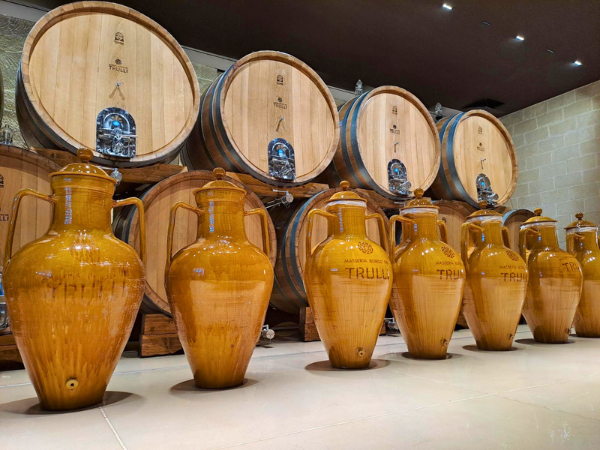
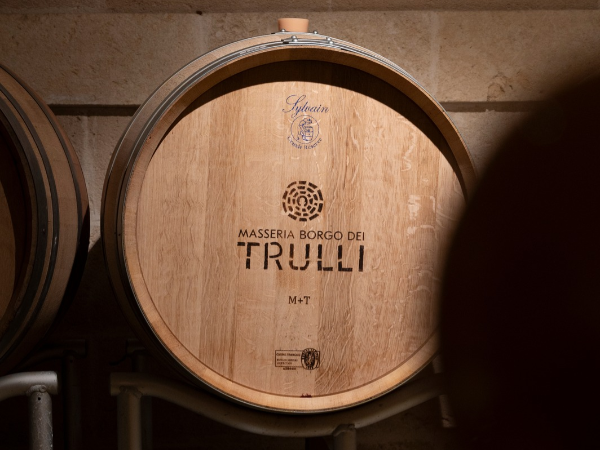
Before reaching the market, wine may mature in stainless steel, barriques, tonneaux, larger oak casks or a combination of different vessels.
Stainless steel preserves the grape’s varietal character and limits contact with oxygen. Oak, on the other hand, encourages slow development and can contribute spicy, toasted or vanilla notes. The size, age and origin of the barrel also influence the result: a new barrique will have a different impact from a large or previously used cask.
The aim is not to overshadow the character of the grapes, but to guide the wine towards a more complex and balanced expression.
Masseria Borgo dei Trulli follows different maturation paths according to the grape variety and desired style.
Mirea Primitivo di Manduria DOP is produced from old bush-trained vines and late-harvested grapes that have begun to dry naturally on the vine. After fermentation in stainless steel, it matures for ten months in French and American oak barriques. Its aromatic profile includes dried fruit, figs, spices, chocolate, plum and coffee.
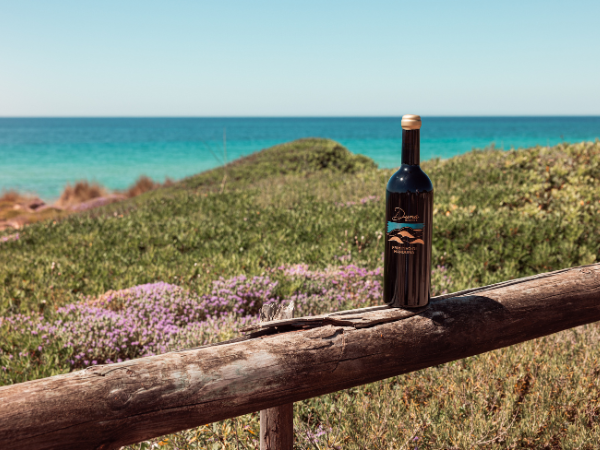
Duna Mirante Primitivo di Manduria DOP is also crafted with complexity in mind. It ferments in stainless steel and matures for twelve months in oak barriques, developing a concentrated character in which ripe fruit, Mediterranean herbs and balsamic notes meet a distinctive savoury quality.
For Liala Negroamaro Salento, 70% of the wine matures for seven to eight months in tonneaux and large oak casks, while the remaining 30% stays in stainless steel. The final blend seeks a balance between fruit, structure and the nuances contributed by oak.
Pinio Salice Salentino Riserva, made from Negroamaro and Malvasia Nera, matures for twelve months in second- and third-use tonneaux, followed by a further six months in large oak casks. The result is a full-bodied, velvety wine with soft tannins and a persistent finish.
To encourage proper development, wine should be protected from light, temperature fluctuations, heat and vibrations. Bottles sealed with natural cork can be stored horizontally in a cool, dark place with a stable temperature.
Time alone does not create quality, but it can enhance everything achieved in the vineyard and the cellar. This is how the finest Apulian wines transform the power of youth into balance, depth and new nuances waiting to be discovered in the glass.
Click below to discover our experiences: journeys that combine history, tradition, and taste, in the heart of Puglia.