Vineyards
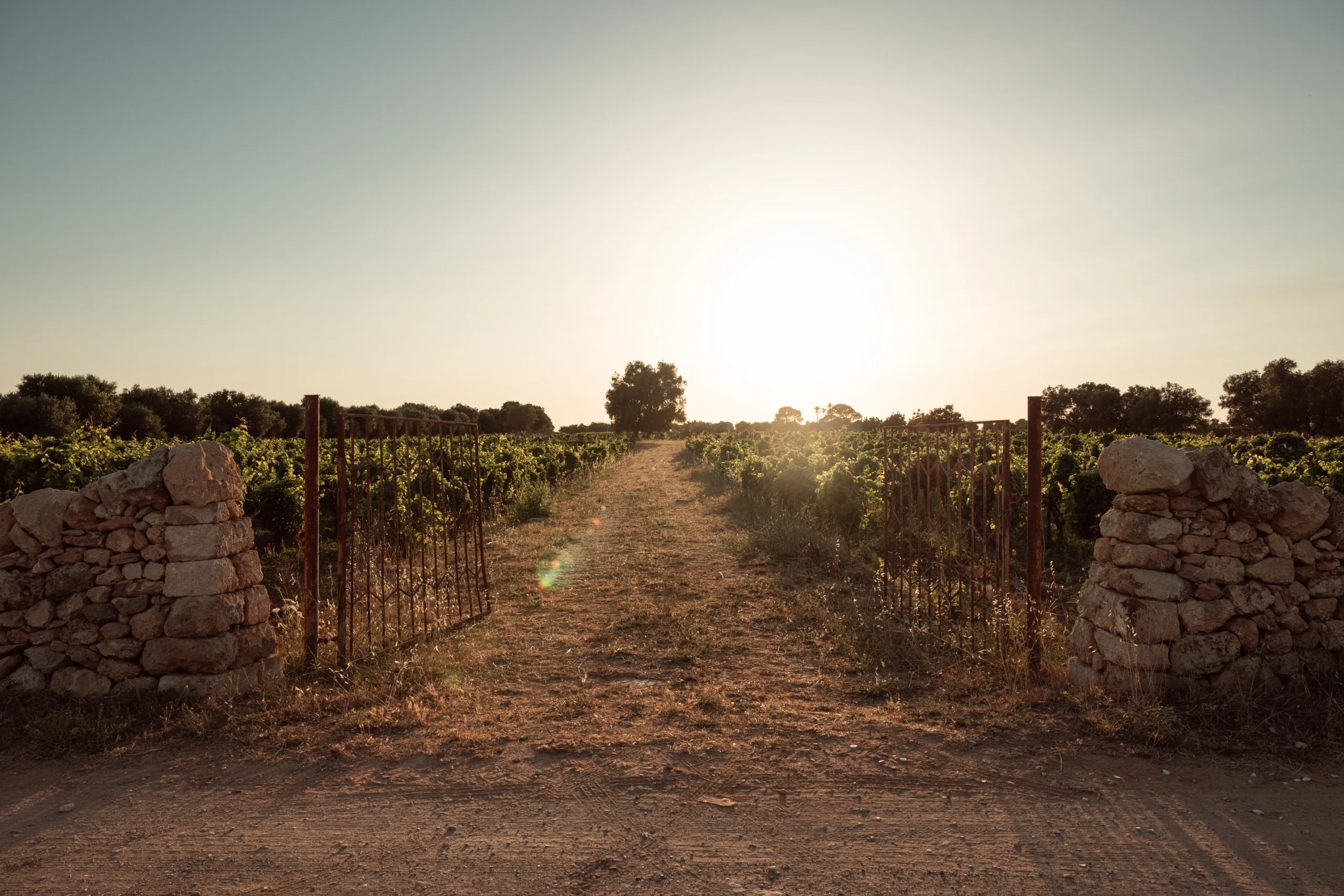
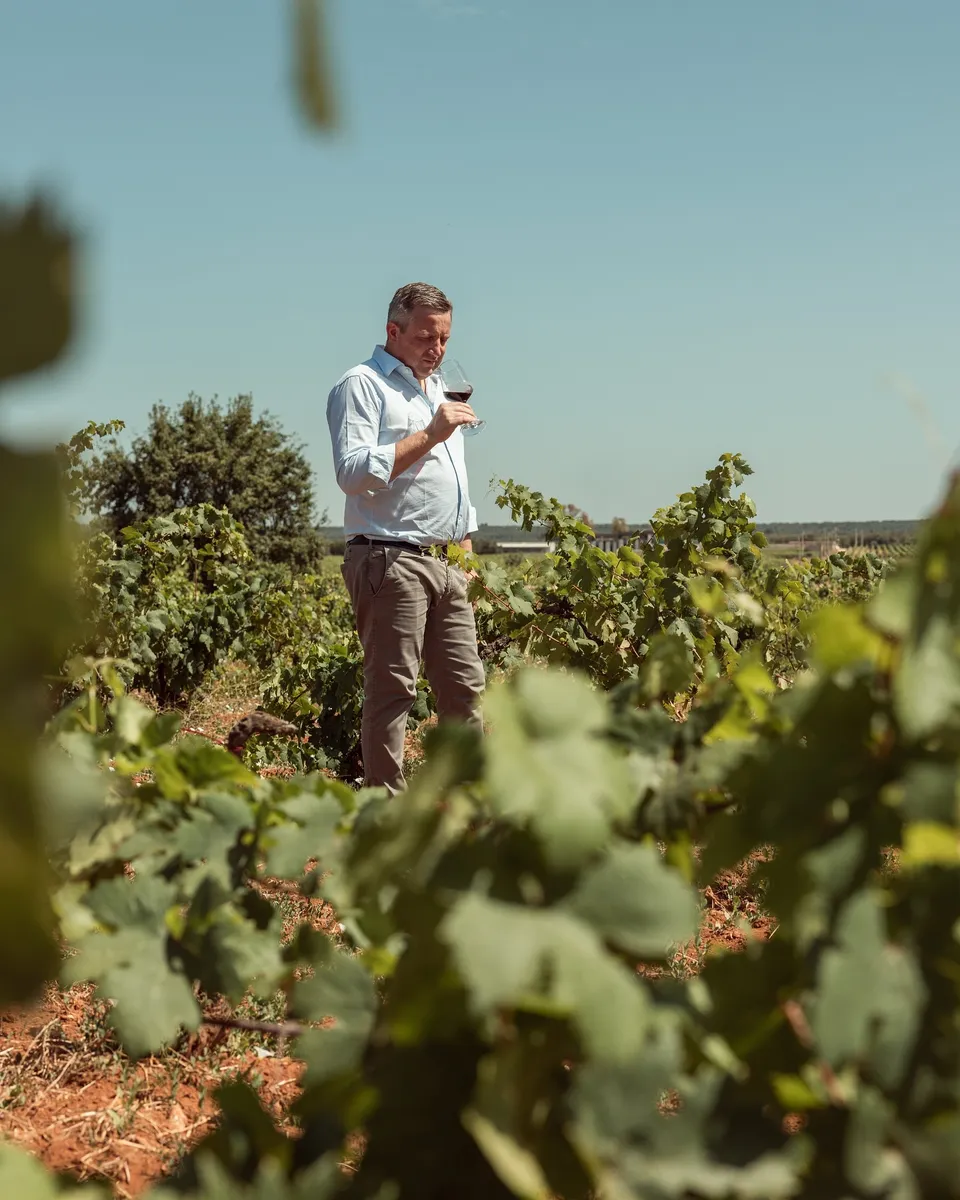
Masseria Borgo dei Trulli owns vineyards in the most prestigious areas of Salento, primarily cultivating Primitivo, Negroamaro, Malvasia, Fiano, Vermentino, Chardonnay, and Sauvignon.
Our estate is managed under organic farming practices. In our vineyards, we preserve biodiversity by maintaining Mediterranean scrub, fruit trees, and “natural” zones along the borders and within the plots; this encourages the presence and habitat of beneficial insects, birds, and local wildlife.
The estate spans 70 hectares, 55 of which are dedicated to vineyards.
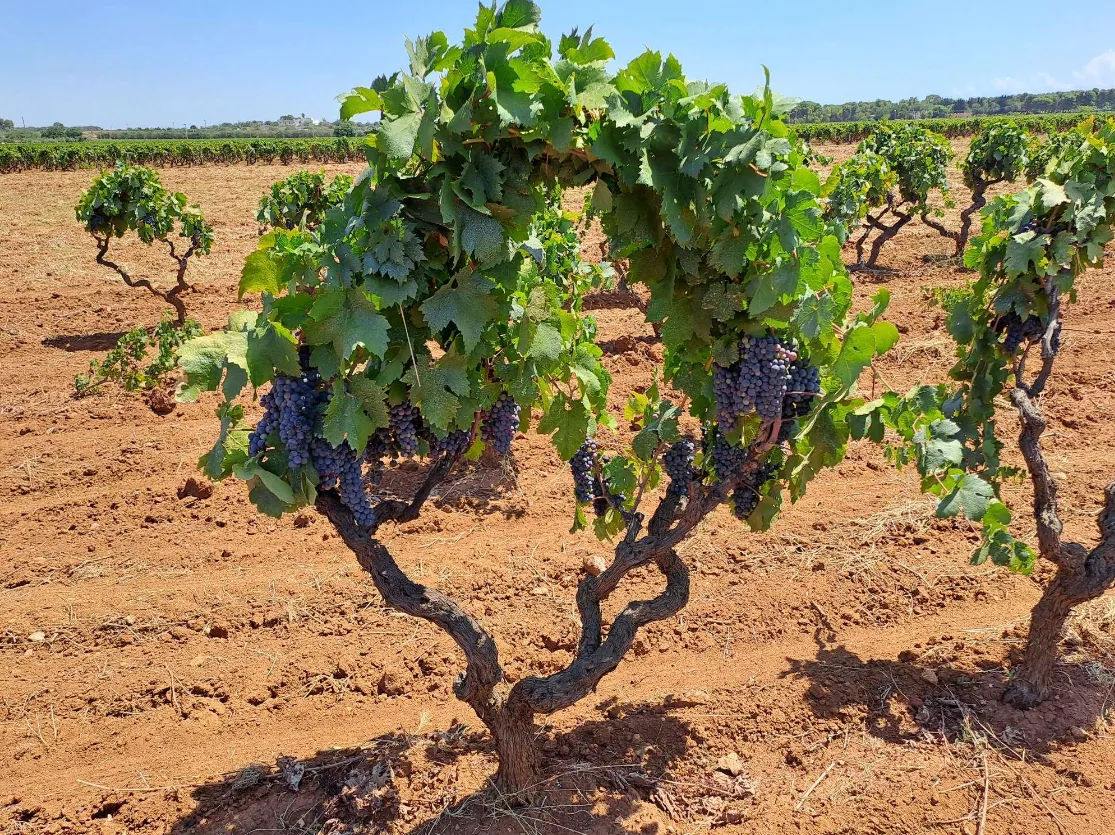
A portion of the property is also home to olive groves. At its precious heart lie 16 hectares of Alberello Pugliese (bush-vines), some dating back to the 1950s: balanced vines with low yields and exceptional grapes in terms of concentration, color, aroma, and structure. Many of these ancient vineyards were “saved” by us from abandonment or uprooting.
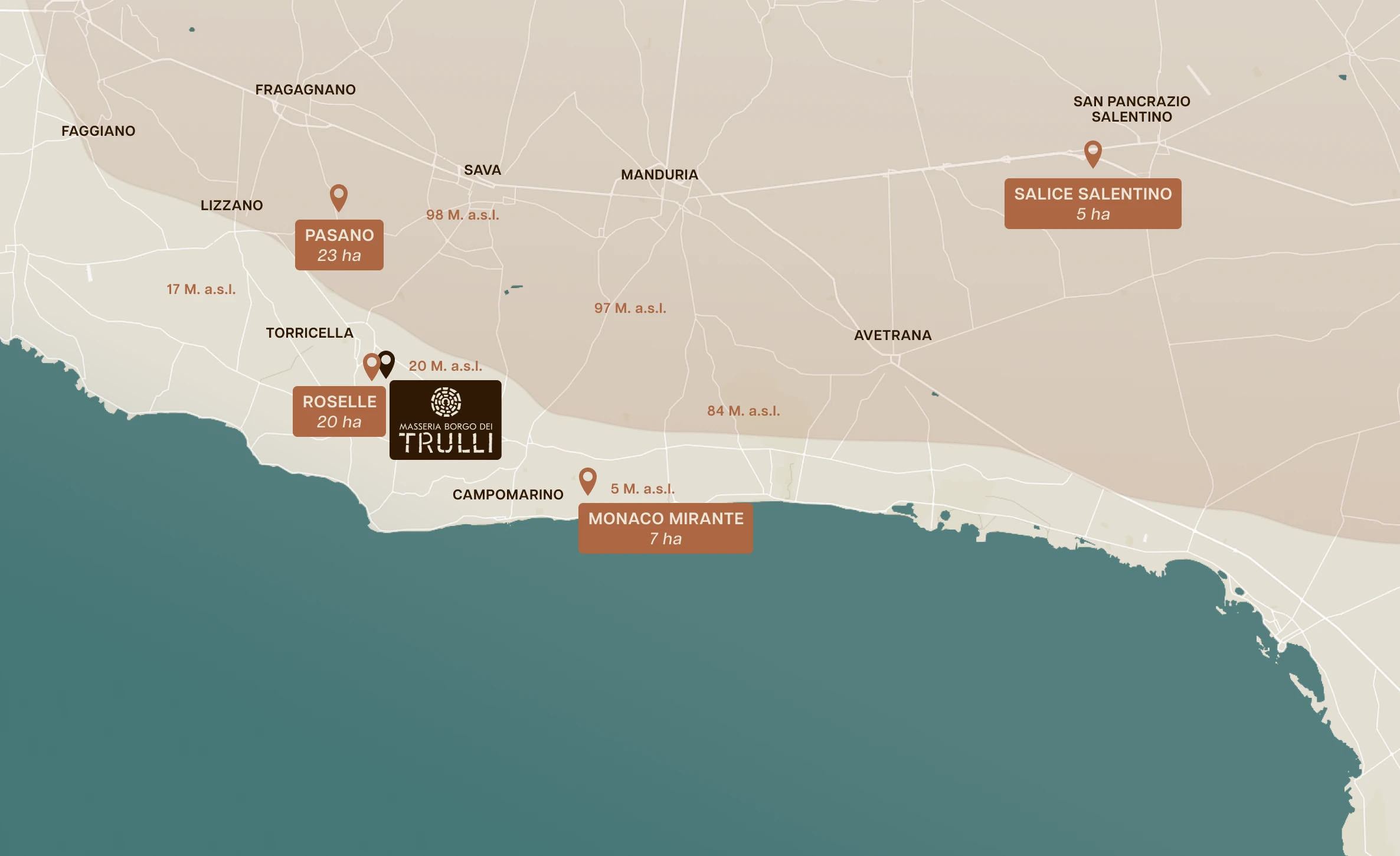
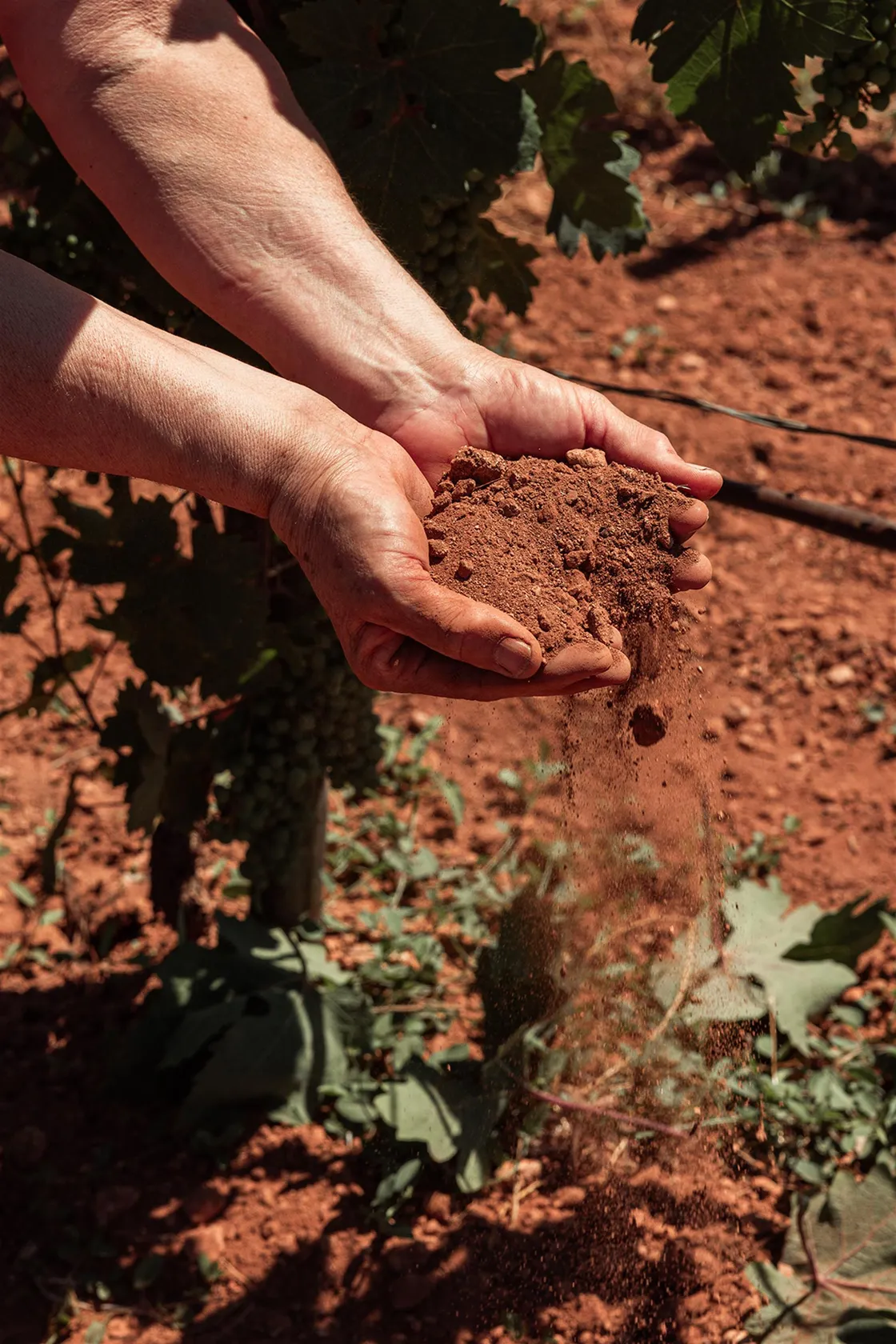
The last ridges of the lower Murgia to the north, the Ionian Sea to the south. Sandy-limestone red soils, rich in iron oxides. The fertile topsoil is often thin, with outcropping rock. Sea breezes help prevent fungal diseases: here, on approximately 12 hectares, we primarily grow Primitivo and Negroamaro.
A sheltered plateau with a climate mitigated by the sea. Soils similar to Roselle but richer in organic matter with a higher clay content. Excellent vegetative-productive balance and natural grape concentration: here we cultivate both reds (Primitivo, Negroamaro) and whites (Vermentino, Sauvignon, Malvasia).
Located 35 km from the winery, in the heart of the DOC. Dark, clayey soils rich in humus. Old Alberello Pugliese vines, producing small, concentrated grapes with fine, mature tannins: this is the source of our Salice Salentino DOC Riserva (approximately 4 hectares).
Just 100 meters from the beach lies this unique vineyard, where Primitivo reveals its most multifaceted character and Vermentino enjoys a privileged position in direct contact with the sea.
Alberello pugliese and sea dunes: deep roots and unique microclimates that make the Masseria so special.
Alberello pugliese
Alberello Pugliese is the historic and distinctive vine-training method of the region, most prevalent in Salento. The vines, grown without support structures and planted closely together, take the form of a small shrub. This technique, which requires a strictly manual harvest, is crucial for quality: the compact shape protects the clusters from excessive sun and water stress, naturally concentrating sugars, tannins, and aromas. Alberello is the key to achieving structured and complex red wines, such as Primitivo and Negroamaro.
The Dunes
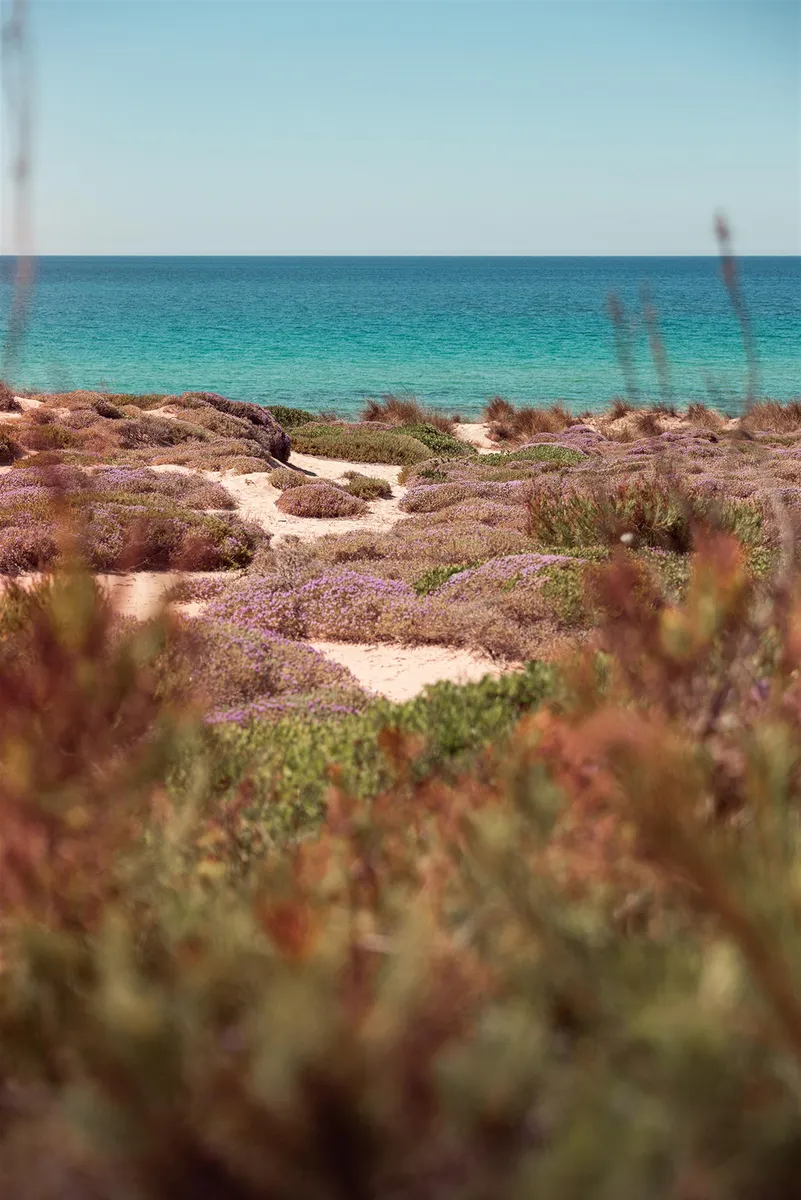
The Dunes of Campomarino di Maruggio (TA) represent one of the most fascinating and best-preserved coastal environments in Ionian Salento. This precious ecosystem is characterized by fine white sand accumulated by the wind. Beyond their scenic beauty, the dunes play a vital role: they act as a crucial natural barrier against erosion and storm surges, essential for coastal protection. Due to their environmental value, the Campomarino Dunes have been recognized as a Site of Community Importance (SCI) and a Special Area of Conservation (SAC) within the Natura 2000 Network; furthermore, part of the territory is established as the “Dune di Campomarino” Regional Nature Reserve.
The harvest
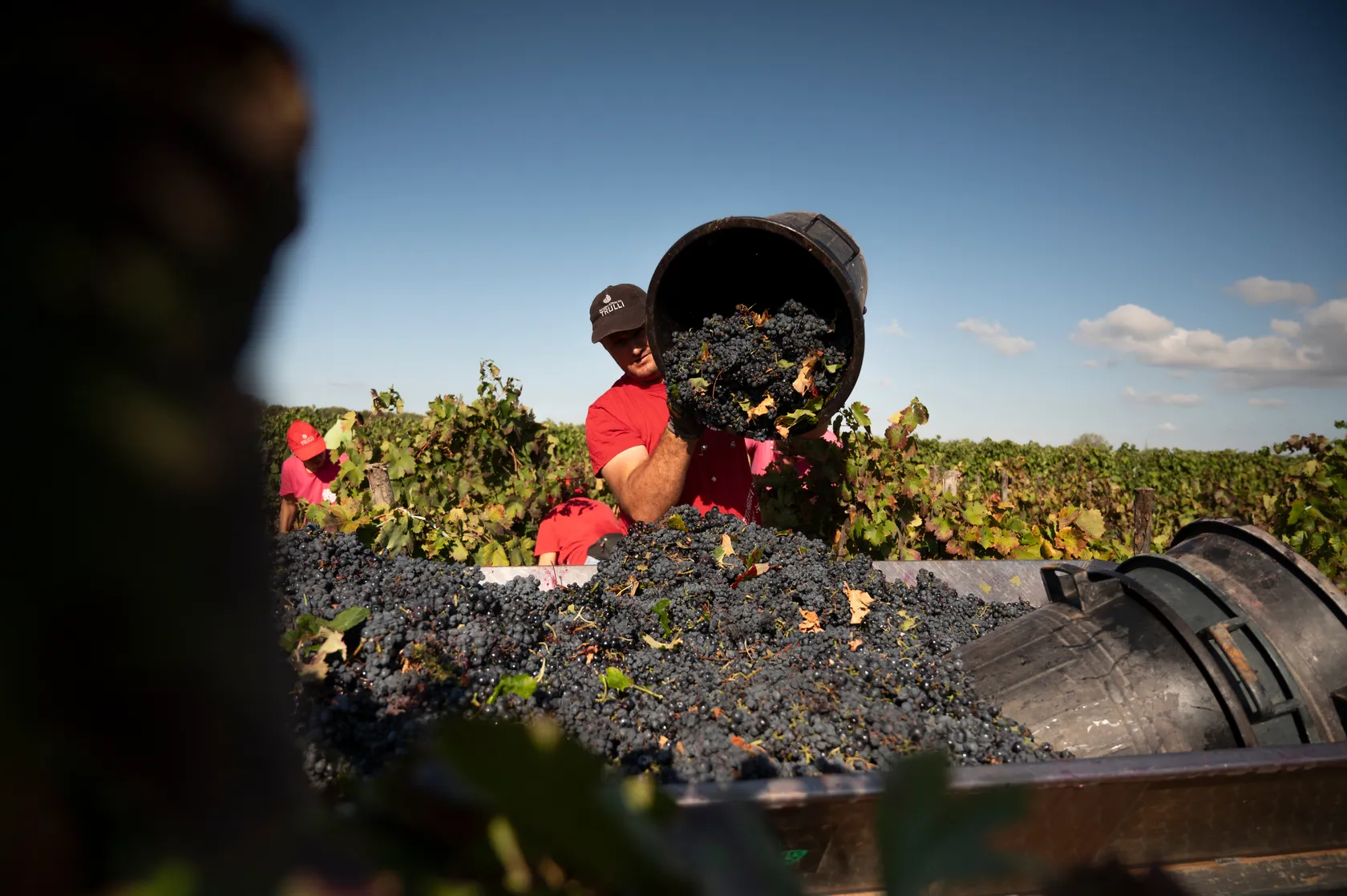
The harvest is the time when the fruits of a year’s labour are gathered.
At Masseria Borgo dei Trulli, this period takes place between early August and late September, varying according to the specific variety and, above all, the desired character of the wine. Harvesting early emphasizes freshness and acidity—ideal for a fruitier profile. Conversely, a late harvest provides the final product with greater structure, smoothness, and complexity.
method
Peduncle twisting (giro del picciolo)
Peduncle twisting technique involves “pinching” the peduncle (the stem of the grape cluster) using specialized pliers to cut off the nutrient flow to the bunch.
This results in a natural drying of the grapes on the vine, leading to water loss and a deep concentration of the wine’s flavors and aromas.
method
Appassimento (drying process)
This process involves hand-harvesting the grapes in 5 kg crates.
These crates are then placed in a “fruttaio” (a well-ventilated drying room), where the grapes are left to wither under controlled temperature and humidity for approximately 10–15 days.
During this period, the grapes can lose up to 40% of their original weight. Both processes result in a superior concentration of color, body, and aromas.